Understanding EMDR
Eye Movement Desensitization and Reprocessing
Think of your brain like a room full of filing cabinets. Each drawer holds experiences, memories, emotions, and beliefs. Normally, when something happens, your brain processes it and files it away, so you can remember it without becoming overwhelmed.
However, Trauma is different.
When something feels too overwhelming, the brain may not process and store it in the usual way. Instead of being filed away as something in the past, the memory can remain active and easily triggered.
Traumatic memories are often stored in a fragmented way and may stay linked to:
emotions
body sensations
negative beliefs
survival responses
The memory does not feel like it’s over.
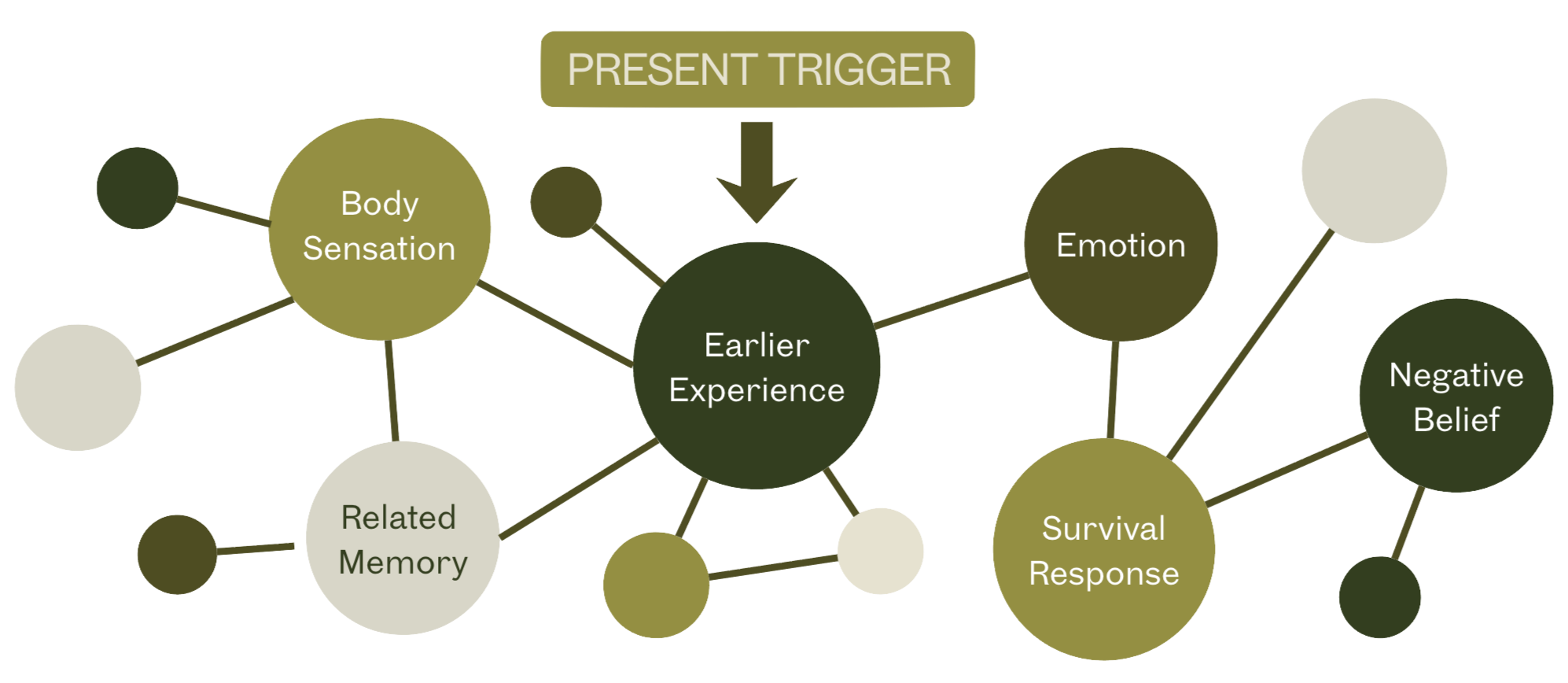
The brain stores memories in networks, not single files. This means one memory can be connected to pictures, feelings, body sensations, thoughts, and emotions all at once.
EMDR helps the brain return to unprocessed memories and reprocess them in a more adaptive way. Using bilateral stimulation, such as eye movements, tapping, or alternating sounds, the brain is able to process what feels stuck.
Rather than forcing the mind in a certain direction, EMDR allows the brain to move through connected material at its own pace.
Over time, this can help:
reduce emotional distress
shift negative beliefs
lessen body activation
help the memory feel more fully in the past

The memory does not disappear. It becomes something that happened, rather than something that still feels like it is happening.
Who is EMDR for?
EMDR therapy is an evidence-based approach that is most commonly used for trauma. It can be helpful for a range of difficulties where past experiences continue to impact how you feel, think, or respond in the present.
EMDR is not a one-size-fits-all approach and is used as part of a broader, trauma-informed process, depending on what is appropriate for you.
-
EMDR is most commonly used to support people processing traumatic or distressing experiences, including symptoms of PTSD.
-
EMDR may help with earlier experiences that continue to shape emotional patterns, self-beliefs, and relationships in adulthood.
-
When anxiety is connected to past experiences, triggers, or unresolved memories, EMDR can help reduce the intensity of those responses.
-
EMDR may be helpful when depression is linked to unresolved experiences, negative self-beliefs, grief, shame, or difficult memories from the past.
-
EMDR can support work around people-pleasing, fear of abandonment, avoidance, difficulty trusting, or feeling unsafe in relationships.
-
EMDR often works with beliefs such as “I’m not safe,” “I’m not good enough,” “I’m powerless,” or “It was my fault.”
-
EMDR may be helpful when grief feels stuck, traumatic, complicated, or connected to distressing memories.
-
EMDR can be used when fears are linked to specific experiences or strongly held threat responses.
-
EMDR can help when the body continues to react as if danger is still present, even when the situation has passed.
-
EMDR may support people who feel easily triggered, emotionally flooded, shut down, or unable to regulate after stressful experiences.
Still not sure if EMDR is right for you?